Loading...
Serving San Jacinto, CA and surrounding areas. (951) 910-7048
San Jacinto Sunrooms & Patios builds four season sunrooms, patio enclosures, and screen rooms for Corona homeowners, with direct experience on the area's 1980s and 1990s tract home stock, Santa Ana wind conditions, and clay soils that affect concrete and footings across the city. We have served Riverside County since 2016 and handle permits through the City of Corona Building and Safety Division from application to final inspection.
Corona is a city of owner-occupied homes on real lots, most built between 1980 and 2005, with concrete patios, attached garages, and enough outdoor space to make an enclosed addition genuinely useful. The challenge is that 20 to 40 years of heat, clay soil movement, and Santa Ana wind exposure changes what those structures look like on the inside - and that affects how we approach every project here.
Corona summers regularly exceed 100 degrees, and the mild but real winters bring occasional frost. That range makes climate control a genuine requirement rather than a luxury for a room you actually want to use year-round. Our four season sunrooms are built with insulated framing, low-E glazing, and a dedicated mini-split system sized for this climate - so the room is comfortable from January through August without overloading your existing central air.
Most Corona homes have a concrete slab patio off the back, often with an existing aluminum or wood patio cover. These are a practical foundation for an enclosure - the slab is already there and the cover may be reusable. We assess both before committing to a design, because clay soil movement means a slab that looks solid may have shifted enough to affect drainage and framing connections in an enclosed structure.
Corona homeowners have invested significantly in their properties - with median home values around $600,000, added livable square footage is a meaningful improvement. A sunroom addition converts outdoor space into conditioned living area without the disruption of a full structural addition, and in a city with this level of owner-occupancy, that extra room tends to hold its value.
For Corona homeowners who want extended outdoor use without the cost of full enclosure glazing, a screen room is a strong choice. It keeps insects out, provides shade during the intense summer months, and opens up the outdoor space for use in the cooler evenings that are one of the better things about living in this part of Riverside County.
Corona's neighborhoods vary in lot size, home style, and backyard configuration - from compact lots near the 91 freeway corridor to larger properties in the hills near Glen Ivy. A custom sunroom design accounts for the specific footprint, roofline, and exterior finish of the individual home rather than applying a standard package that may not fit the site correctly.
Corona's combination of intense UV exposure, triple-digit summer heat, and Santa Ana wind events is demanding on exterior materials. UV-stabilized vinyl framing does not fade, rust, or require repainting the way painted aluminum and untreated wood do in this climate - which matters for a structure you expect to use for the next 20 to 30 years without constant upkeep.
Most of Corona's housing stock was built in large planned subdivisions during the 1980s, 1990s, and early 2000s - single-family stucco homes with tile roofs, attached two-car garages, and covered concrete patios. At 20 to 40 years old, these homes are at the age where roofing underlayment, exterior sealants, and concrete flatwork are starting to show the effects of years of heat, UV exposure, and seasonal soil movement. When we assess a property for a patio enclosure or four season room, we are not just measuring the backyard - we are looking at the condition of the existing slab, the integrity of the exterior wall framing, and whether the attachment points can carry the structural load of an enclosed addition. Cutting that assessment short leads to problems mid-build or after the job is done.
Corona's climate drives specific demands on any outdoor structure. Summer temperatures regularly exceed 100 degrees for extended periods, and the city sits in the direct path of Santa Ana wind events that can gust past 60 mph in fall and early winter. Those winds put real mechanical stress on glazing panels, roofline connections, and any structure attached to the house - which is why structural framing and fastener specs matter as much as the aesthetic choices. The expansive clay soils throughout the area cause concrete slabs and footings to shift with the wet-dry cycle, and that soil movement is one of the main reasons we see cracked flatwork and uneven slabs on properties across every neighborhood in the city.
Our crew works throughout Corona regularly, and we pull building permits through the City of Corona Building and Safety Division for room additions and patio enclosures in this city. The permit process for standard projects here is straightforward - we prepare and submit the construction documents, handle review correspondence, and schedule inspections from start to close. We factor the permit review window into every project timeline so the schedule does not catch anyone off guard.
The 91 freeway is the artery that connects Corona to Orange County and Los Angeles, and most of the city's residential neighborhoods spread out from that corridor. Dos Lagos near the south end of the city is a well-known local landmark, and the neighborhoods around it are representative of the mid-2000s home construction common throughout south Corona. The hills to the west, near Glen Ivy Hot Springs and the base of the Santa Ana Mountains, have some of the more distinctive terrain in the area, with sloped lots and views that make an enclosed sunroom addition especially usable for a good portion of the year.
We also serve neighboring Riverside and San Jacinto. If your home is in one of those cities, we are already active in your area and can schedule promptly.
Call us or fill out the contact form with a brief description of what you have in mind. We respond within one business day and set up a time to visit the property - no measurements or drawings are needed on your end before we come out.
We assess the existing slab, attachment walls, drainage, and overall site conditions. We provide a written, itemized estimate at no obligation. Cost questions are answered clearly here - including what any remediation work would add - so nothing is uncertain before you decide.
We submit the permit application to the City of Corona Building and Safety Division and begin construction once approved. On-site work for a standard four season room or patio enclosure typically runs two to four weeks. We keep you informed at each project milestone.
We schedule the final city inspection and walk through the completed project with you before closing out. Any items from the walkthrough are addressed before we consider the job finished.
We serve all of Corona and the surrounding Riverside County area. No pressure, no obligation - just a clear written estimate based on your property.
(951) 910-7048Corona is one of the larger cities in Riverside County, with a population of roughly 170,000 and a strong owner-occupied housing market. The city grew rapidly during the suburban building booms of the 1980s and 1990s, drawing families from Los Angeles and Orange County who wanted more space at lower prices. Its location along the 91 freeway - right on the Riverside-Orange County border - made it an obvious choice for commuters, and that commuter culture means most residents have put down real roots here and invest in their properties. The majority of the housing stock is single-family stucco construction on lots of 6,000 to 10,000 square feet, with concrete driveways and backyard patios that get heavy use throughout the year. More background on the city's history and character is available through the Corona Wikipedia article.
The western edge of the city borders the Santa Ana Mountains, and several neighborhoods near Glen Ivy Hot Springs sit on hillside terrain with sloped lots and distinctive views. The central and eastern portions of the city are more typical of Inland Empire suburban development - flat to gently rolling, with large planned subdivisions and well-maintained residential streets. Dos Lagos in the southern part of the city is one of the most recognized local landmarks. Neighboring Riverside to the east and Moreno Valley further east are also cities we serve regularly.
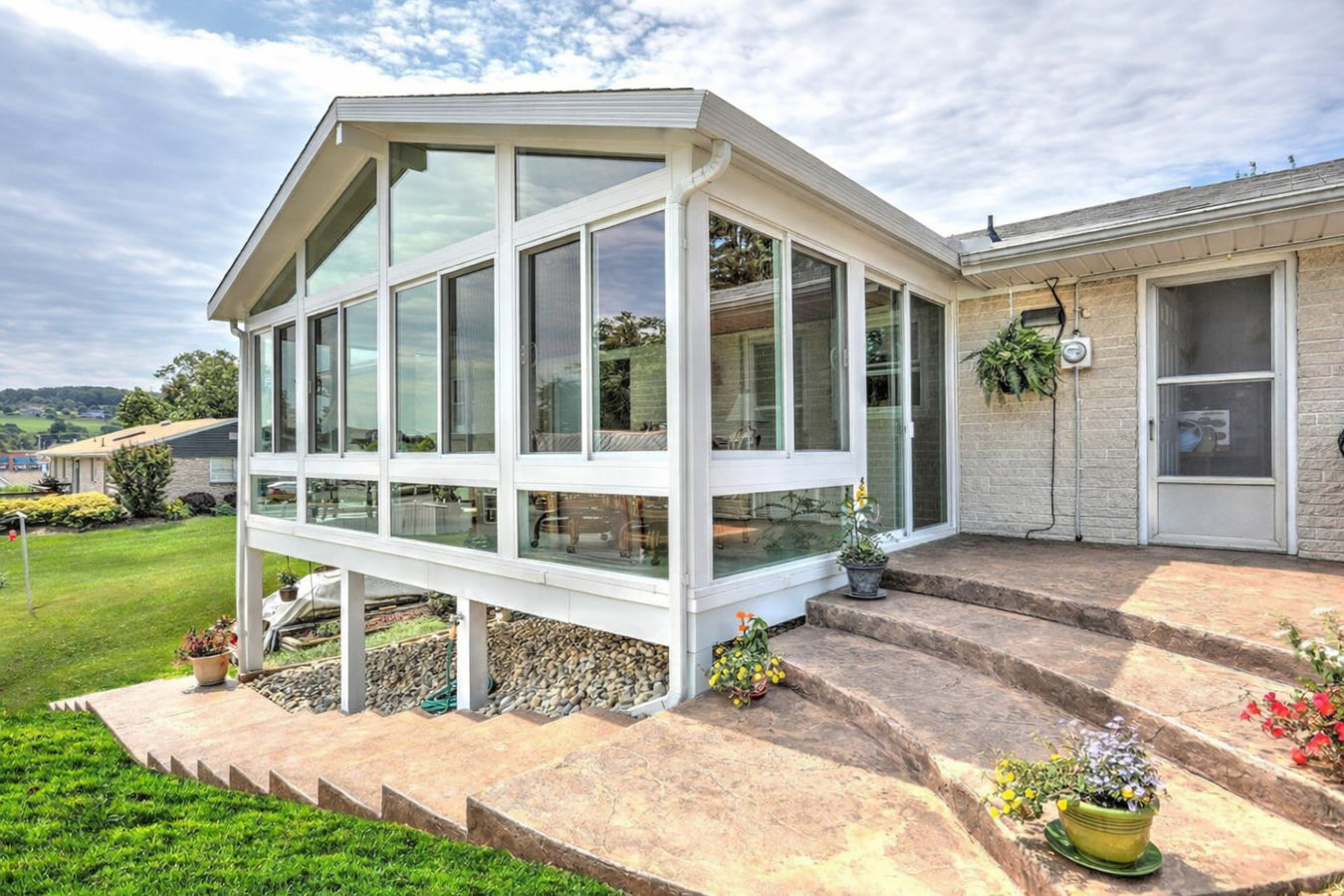
Glass solariums that maximize sunlight and indoor-outdoor connection.
Learn MoreCall today or submit the contact form for a free on-site estimate. We respond within one business day.